Sketchbook, Voice Memo, or Scrap Page: Pick a Capture Habit That Fits
Choose a creative idea capture habit that suits your day, so sparks are easier to recognise, revisit and develop when you have time to make.
A creative idea capture habit works best when it suits the moment the thought arrives. A sketchbook can catch a shape, a voice memo can hold a phrase, and a scrap page can gather bits that belong together. The useful question is not which format is best, but which one makes it easiest for you to return to an idea later.
Try each format across one ordinary week, then keep the one that fits your real pauses: the walk home, the kitchen counter, or the few minutes before bed. You are collecting sparks, not asking every passing thought to become a project.
Choose the format that preserves the clue
Ideas often arrive with a clue attached. It might be a line of dialogue, the angle of a shopfront, or a surprising pairing of colours. Choose a tool that can keep that clue intact without making you stop what you are doing.
- Sketchbook: Pick it when the idea is visual or spatial. A thumbnail drawing can preserve a silhouette, layout, gesture or pattern that would be awkward to describe in words. Add a few labels if the drawing might be hard to recognise later.
- Voice memo: Pick it when the idea depends on sound, rhythm or spoken phrasing, or when your hands are occupied. Say the thought in your own words, then add a short cue about its setting or purpose.
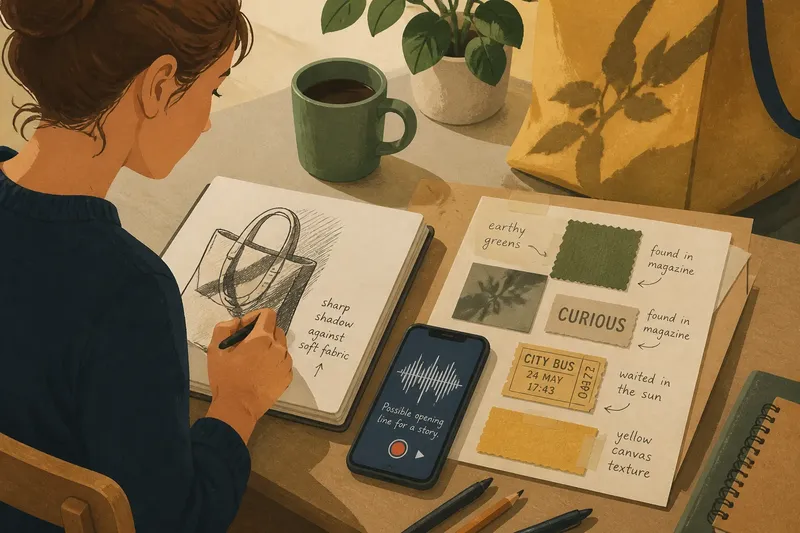
- Scrap page: Pick it when the spark comes from a combination: a ticket, a colour note, a torn packaging edge and a phrase. The page keeps separate pieces visible together, so the relationship between them can survive.
Think of the format as a coat hook by the door. A useful one is the hook you can reach while carrying your everyday things, not the fanciest hook in another room.
Use the week to notice what helps you return
For the first two days, capture ideas without sorting them. On the first day, carry a small sketchbook and make quick marks when an image catches your attention. On the second, record brief voice memos when a phrase or rhythm appears. Keep each note simple; the aim is to preserve a clue, not explain the whole idea.
On the third day, start a scrap page. Use a notebook page, an envelope or a sheet of recycled paper. Attach or copy only the fragments that seem connected, and write a few words beside them so their context remains clear.
During the next two days, use whichever method feels easiest in the moment. Notice the conditions rather than grading the ideas: Were you walking? Had you stopped for tea? Could you use both hands? Did the note make sense when you saw or heard it again?
On the sixth day, revisit one item from each format. Look at the sketch, replay the memo and read the scrap page. Ask which one gives you a clear next move, such as drawing another version, writing a scene or finding a missing visual element. On the final day, choose one format to keep within reach for the coming week. You can still use the others when a particular idea calls for them.
Make each note easy to recognise later
A captured spark can go flat if you cannot remember why it mattered. Add a small amount of context at the point of capture. A place, a mood, a possible use or a question can be enough.
For a sketch, write “arched window, late afternoon light” beside the outline. For a memo, say “possible opening line for a story” before speaking the phrase. For a scrap page, note what made you pair a colour swatch with a printed word. These cues help your future self re-enter the thought without turning the note into a finished plan.
Say you are waiting for a bus and notice a shadow falling across a yellow tote. You make a small sketch, label it “sharp shadow against soft fabric”, then look again at home. The note gives you an observable place to begin: you might try a larger shape, a different colour or a drawing of the bag. The point is not that the sketch has to become art; it has kept the visual clue available.
Keep a small return ritual
Pick a regular moment, such as after Sunday lunch, to browse what you collected. Keep the review brief and gentle. Mark one note with a star, add one question, or move a scrap page into a folder if you want to develop it. Leave the rest alone.
If you have several places where ideas land, give them a simple home. A labelled folder can hold loose pages; a named album on your phone can hold photographs of sketches and scraps; voice memos can sit in one clearly named collection. The aim is to reduce the hunt when an idea comes back to mind.
Which capture habit fits your day?
Is a sketchbook useful if I cannot draw well?
Yes, if a rough mark is enough to remember the shape, spacing or movement that caught your eye. Use arrows, boxes and labels rather than trying to make a polished picture.
When is a voice memo easier than writing?
It often suits a thought that arrives while you are walking, cooking or speaking aloud to yourself. Record only when you can do so safely and without disturbing people nearby.
What belongs on a scrap page?
Use it for pieces that gain meaning from being seen together, such as colour notes, found text, ticket stubs or small sketches. Add a few words to explain the connection you noticed.
Can I use more than one format?
Yes. Keep one as your everyday default, then choose another when the idea has a different kind of clue. A spoken phrase may need a memo, while its visual setting may deserve a sketch.
Choose for ease, not for permanence
Your creative idea capture habit does not need to preserve every thought or turn a quiet hobby into an assignment. It needs to leave you with enough of the original spark to recognise it again. If you often ignore a tool because it is in another room, switch to one that travels with you. If you return to ideas by seeing their pieces together, leave a scrap page open where you make things.
At the end of the week, keep the format that makes one small next action feel apparent. Put it where that action is likely to happen: a sketchbook beside the pencils, a memo shortcut on your phone, or a blank scrap page near the materials you already use. Then let the next interesting thought arrive without demanding that it prove its worth.