Why Learning Sticks When You Explain It in Your Own Words
Learning sticks when you explain it in your own words: uncover gaps, connect ideas and remember what matters with a simple, low-pressure practice.

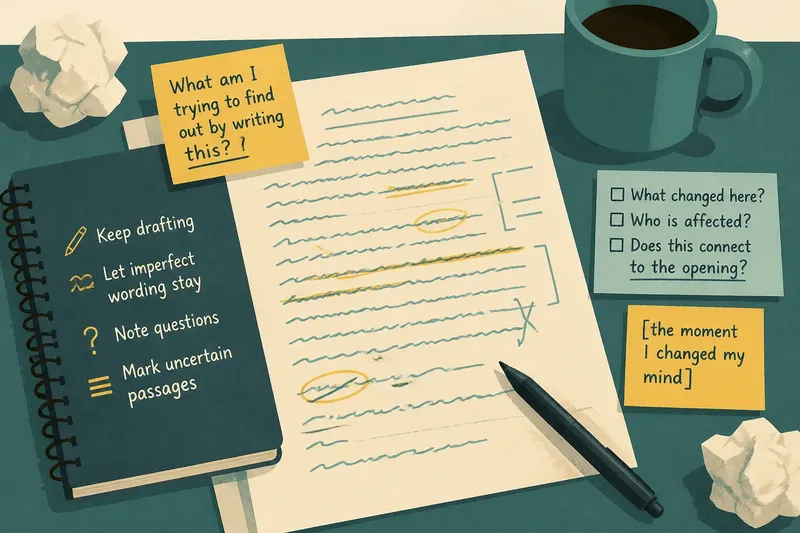
Learning sticks when you explain it in your own words, because explaining makes you decide what an idea means rather than simply recognise familiar phrasing. After a lesson or chapter, try describing its central point as if a curious friend had asked about it over tea. The places where your account goes vague are useful clues, not a verdict on your ability.
This is not about sounding clever or producing a polished summary. It is about rebuilding an idea plainly enough to see which parts you understand, which depend on the source’s wording, and how the new knowledge connects to things you already know.
Start with the idea, not the source’s wording
When a textbook, teacher or video explains something clearly, its phrasing can feel like your understanding. Yet repeating the same sentence may only show that you recognise it. Close the source and ask, “What is the main thing I would want someone to understand?” Then answer without looking.
Use ordinary words, even if they seem less precise at first. If you have learnt that a plant’s leaves use sunlight to help make food, say that before reaching for technical terms. Add the accurate vocabulary afterwards, once the basic meaning is yours.
It is like describing a room from memory rather than reading its estate-agent listing: you have to choose what matters. That choice brings the idea into focus and helps separate its central point from decorative detail.
Use a gap as a prompt to investigate
A faltering explanation is not a reason to bluff. Notice the exact point where you get stuck. Perhaps you can describe what happens but not why, or you know the terms but cannot explain how they relate. A specific gap gives you a manageable question to take back to your notes or lesson.
Imagine you have just learnt how a household thermostat responds to temperature. You can say that it helps keep a room near a chosen setting, but cannot explain what triggers the heating to switch off. You return to the relevant diagram, check the relationship between room temperature and the setting, then try the explanation again. The result you are aiming for is a clearer account of that link, not a perfect speech about every part of the heating system.
Keep the question narrow: “What tells the system to stop heating?” is easier to investigate than “Do I understand thermostats?” Once you have answered it, explain the whole idea again. That second attempt checks whether the missing link now fits into the larger picture.
Keep the explanation short enough to expose the logic
A long explanation can hide uncertainty under extra words. Try giving the idea in a few plain sentences, then ask whether each sentence has a clear job. One might state the main claim, another explain why it works, and a final one give a simple illustration.
If the account only makes sense after several detours, pause and find the relationship you are trying to express. Is one thing causing another? Are two concepts being compared? Does a condition need to be met? Naming the relationship often makes the rest easier to say.
Short does not mean oversimplified. Keep qualifications that change the meaning. If a general principle has exceptions, say that it applies under certain conditions rather than presenting it as universal. Plain language should make an idea easier to inspect, not less accurate.
Connect the idea to something familiar
An unfamiliar concept becomes easier to handle when you relate it to something you already understand. Ask what everyday situation has a similar structure, then explain both the resemblance and its limit. This creates a bridge without pretending that two different things are identical.
For instance, someone learning about a food chain might compare it to linked dependencies: one part relies on another for resources. They should also note where the comparison stops, since living organisms are not simply interchangeable links. That qualification helps keep the explanation accurate.
Choose a connection that clarifies the relationship, not one that merely sounds memorable. If the analogy needs a long explanation of its own, it may be adding clutter. Return to the original concept in your final sentence to check whether the familiar comparison helped.
Rebuild the explanation after a pause
An explanation made immediately after a lesson can still lean heavily on its wording and order. After some time away, try to explain the idea again from memory. The delay gives you another chance to see what you can retrieve and which parts still need attention.
Keep the second attempt separate from the first rather than copying it and changing a few words. Start with the central idea, then supply the connections that make it make sense. If a detail has slipped, check the source and add only what you need before trying once more.
This need not become a formal study routine. You might explain a cooking technique to a housemate later that day, or describe a new concept aloud while walking home. A brief return to the idea can help you notice whether it has become something you can use, rather than a sentence you remember seeing.
What should your explanation sound like?
Should you explain aloud or write it down?
Either works. Speaking can feel natural when you are telling someone about a lesson, while writing lets you see where a sentence becomes unclear. Choose the format that makes it easiest to notice your reasoning.
What if you cannot explain the idea simply?
Say the idea in one sentence using everyday words, then mark the first phrase that feels vague or turns into a list of terms. Return to the source to check that point, name the missing relationship, and try the sentence again; if it still feels unclear, keep the technical term but explain what it means in this context.
How much detail should you include?
Include the main idea, the relationship that supports it, and any condition that changes its meaning. Leave out side details unless they answer a reasonable question or prevent a misunderstanding.
How can you tell whether the explanation is clear?
Ask a listener to tell you what they think you meant, or read your explanation later and check whether the reasoning still follows. If the result is unclear, identify the missing connection and revise that part rather than adding more words everywhere.
Make your own words the place to check understanding
Learning sticks when you explain it in your own words and treat clarity as a way to check understanding, not as a performance. The most useful explanation may still be rough; it simply needs to show what you mean and point honestly to what you have not worked out yet. Keep the original source nearby for accuracy, but let your own account show you what the idea means to you.